 1.855.305.2430

The COMT Gene and Caffeine: Why Coffee Affects People Differently Leave a comment
Key Takeaways
- The COMT gene significantly influences how your body processes caffeine, explaining why some people experience anxiety after one cup while others can drink coffee all day.
- People with the slow-metabolizing Met/Met variant (often called “Worriers”) may experience heightened caffeine sensitivity, anxiety, and jitters compared to those with the Val/Val variant (“Warriors”).
- Research shows that individuals with the low-activity COMT variant face potentially higher cardiovascular risks when consuming large amounts of caffeine.
- Multiple genes interact to determine your personal caffeine response, with COMT working alongside CYP1A2, ADORA2A, and AHR genes to process stimulants.
- Understanding your genetic predisposition can help you personalize caffeine consumption for optimal energy without unwanted side effects.
Your Genes Make Coffee Hit Different: The COMT Connection
Ever wondered why your friend can down four espressos and sleep like a baby, while half a cup leaves you wired until midnight? The answer likely lies in your genes, particularly a fascinating little gene called COMT. This gene creates fundamental differences in how each person’s body processes not just caffeine, but all stimulants. Genetic Life Hacks, a leading resource on personalized genetic insights, reveals that these differences aren’t just minor variations—they can completely transform your coffee experience.
The Catechol-O-methyltransferase (COMT) gene creates an enzyme that breaks down catecholamines in your body—the neurotransmitters that include dopamine, adrenaline, and noradrenaline. When you drink coffee, caffeine triggers an increase in these very compounds. How quickly or slowly your body processes these stimulating substances depends largely on which variant of the COMT gene you inherited.
Remarkably, about 25% of the population has a slower version of this enzyme, making them significantly more sensitive to caffeine’s effects. Another 25% process these compounds very efficiently, while 50% fall somewhere in the middle. This genetic lottery helps explain why caffeine affects everyone differently, from the coworker who’s bouncing off walls after a single latte to the one who needs three cups just to maintain baseline function.
- Fast metabolizers can drink coffee throughout the day with minimal side effects
- Slow metabolizers often experience anxiety, jitters, and disrupted sleep even with moderate consumption
- Intermediate metabolizers typically experience moderate effects that vary based on other factors
- Your COMT status affects not just caffeine response but stress handling and cognitive function
Why Some People Get Jittery While Others Stay Calm
The jitters, anxiety, and racing heartbeat that some experience after coffee isn’t weakness or imagination—it’s biochemistry. When caffeine blocks adenosine receptors in your brain, it triggers the release of excitatory neurotransmitters like dopamine and adrenaline. For individuals with the slow-metabolizing COMT variant, these stimulating compounds remain active in the brain and body much longer. The extended exposure to elevated catecholamine levels creates the classic caffeine sensitivity symptoms: anxiety, restlessness, and that unmistakable jittery feeling that can ruin your afternoon.
What Is the COMT Gene and Why Does It Matter for Coffee Drinkers
The COMT gene provides instructions for creating an enzyme that serves as your body’s cleanup crew for catecholamines—the chemical messengers that put your body in “go mode.” Located on chromosome 22, this gene exists in everyone but comes in different variants that work at different speeds. This variation directly impacts how you respond to not just coffee but all stimulants, stress, and even pain.
For coffee drinkers, COMT is particularly important because caffeine inherently increases catecholamine levels by blocking adenosine receptors. When adenosine can’t tell your brain to calm down, neurons fire more actively, triggering the release of these stimulating compounds. How quickly your body can clear these compounds determines whether you feel pleasantly alert or uncomfortably overstimulated after your morning cup.
The Science Behind Catecholamine Metabolism
At the molecular level, the COMT enzyme works by transferring a methyl group to catecholamines, effectively neutralizing their stimulatory effects. This process happens throughout your body but is particularly active in your prefrontal cortex—the brain region responsible for executive functions like planning, decision-making, and emotional regulation. When catecholamines like dopamine build up in this region due to slower COMT activity, you may experience both enhanced focus and increased anxiety, depending on the situation and your unique neurochemistry.
How COMT Processes Dopamine, Adrenaline, and Noradrenaline
The COMT enzyme acts like a molecular scissors, snipping off methyl groups from catecholamines to render them inactive. This process is crucial because dopamine, adrenaline, and noradrenaline are powerful stimulants that, while necessary for normal functioning, can cause problems when levels remain elevated for too long. When you consume caffeine, it temporarily blocks the body’s natural “calm down” signal (adenosine), leading to increased production of these stimulating compounds. Your COMT enzyme then works to clear them away at a rate determined by your genetic profile.
The Val158Met Polymorphism: The Key Genetic Variation
The most studied variation in the COMT gene is known as Val158Met (rs4680), where a single nucleotide change causes the enzyme to contain either valine (Val) or methionine (Met) at position 158. This tiny difference creates dramatic functional consequences. The Val variant produces an enzyme that works 3-4 times faster than the Met variant. Since you inherit one copy of this gene from each parent, you’ll have one of three possible combinations: Val/Val (fast metabolism), Val/Met (intermediate metabolism), or Met/Met (slow metabolism). For more insights into how genetics affect your caffeine consumption, you can explore this informative article.
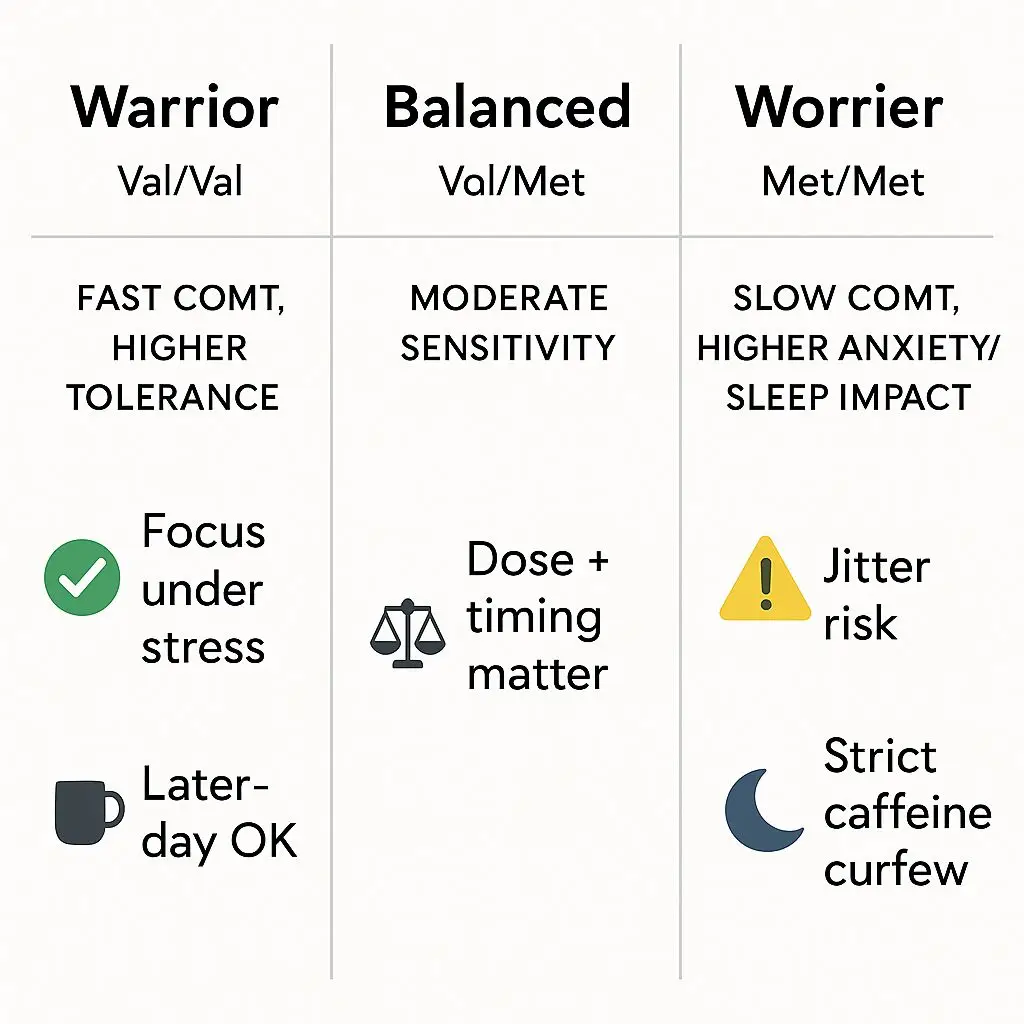
This polymorphism has earned nicknames in scientific literature based on observed behavioral patterns. The fast-metabolizing Val/Val variant is often called the “Warrior” genotype because it processes stress chemicals efficiently, potentially leading to better performance under pressure. The slow-metabolizing Met/Met variant is dubbed the “Worrier” genotype because the prolonged exposure to stress chemicals can heighten anxiety but may also improve attention to detail and cognitive performance in calm environments.
The Warrior vs. Worrier Genetic Profiles
The terms “Warrior” and “Worrier” reflect how these genetic variants influence not just caffeine response but overall stress resilience. While somewhat simplistic, these labels help illustrate fundamental differences in how people experience stimulants like caffeine. About 25% of people have the full Warrior profile (Val/Val), another 25% have the full Worrier profile (Met/Met), and the remaining 50% have a mixed profile (Val/Met) with characteristics of both.
Fast Metabolizers (Val/Val): The Coffee Warriors
If you’re a Val/Val carrier—a “Warrior” type—your body efficiently clears catecholamines, including those released by caffeine consumption. You’re likely the person who can drink coffee throughout the day and even right before bed without major consequences. Your efficient COMT enzyme quickly processes the stimulating neurotransmitters, preventing them from building up to levels that cause anxiety or jitters. However, this efficiency comes with tradeoffs—you may need more caffeine to feel its beneficial effects, and you might experience less of the focus-enhancing aspects of moderate dopamine elevation.
Slow Metabolizers (Met/Met): The Coffee Worriers
Met/Met carriers—the “Worrier” types—process catecholamines at about 25-30% of the rate of Warriors. When you drink coffee, the stimulating neurotransmitters remain active much longer, potentially causing extended periods of anxiety, jitteriness, or insomnia. Even small amounts of caffeine can feel overwhelming. On the positive side, the naturally higher dopamine levels in your prefrontal cortex may contribute to better focus and cognitive performance—as long as you’re not pushed into an overstimulated state by additional caffeine.
Middle Ground (Val/Met): The Balanced Responders
Most people fall into this intermediate category, inheriting one copy of each variant. Val/Met carriers typically experience moderate caffeine sensitivity, with effects more pronounced than Warriors but less intense than Worriers. Your caffeine tolerance may also fluctuate more based on other factors like stress levels, sleep quality, and hormonal changes. Many people in this group can enjoy moderate coffee consumption with minimal side effects but may need to be more careful about timing and quantity than their Warrior counterparts.
How Your COMT Gene Affects Your Caffeine Experience
Beyond the basic metabolism differences, your COMT variant influences specific aspects of how caffeine affects your body and mind. Understanding these effects can help you optimize your caffeine consumption for maximum benefit with minimum drawbacks. The impact extends from immediate physical sensations to cognitive performance and even long-term health considerations. For more insights, check out this article on who should limit caffeine based on genetic factors.
The Stress Response Connection
Your COMT status directly influences how caffeine interacts with your stress response system. For slow metabolizers, caffeine consumption essentially mimics a stress response by increasing catecholamines that remain elevated for extended periods. This can trigger the same physical sensations as anxiety—racing heart, shallow breathing, and heightened alertness. During already stressful periods, this effect amplifies, which explains why that morning coffee might feel fine on relaxed days but overwhelming during high-pressure work weeks.
Why Slow Metabolizers Feel Anxiety and Jitters
The mechanism behind caffeine-induced anxiety in slow COMT metabolizers is fascinating. When catecholamines remain elevated in the brain, particularly in the prefrontal cortex and amygdala, they create a neurochemical environment similar to chronic stress. Research from Happonen et al. shows that individuals with the Met/Met variant experience significantly higher anxiety responses to identical doses of caffeine compared to those with Val/Val variants. This isn’t psychological but physiological—your brain is literally swimming in stimulating chemicals for longer periods.
Additionally, the extended exposure to elevated dopamine levels can create uncomfortable physical sensations. The jitters, racing thoughts, and palpitations aren’t just annoying side effects—they’re direct results of your body’s impaired ability to clear these powerful neurotransmitters from your system. For Met/Met carriers, even moderate caffeine consumption can push dopamine levels beyond the optimal range for comfortable functioning.
Fast Metabolizers and Caffeine Tolerance
Val/Val carriers face the opposite challenge. Their COMT enzyme works so efficiently that caffeine’s stimulating effects may be cleared before they can fully enjoy the benefits. Fast metabolizers often develop higher caffeine tolerance, requiring larger doses to feel the alertness effects that slow metabolizers get from minimal amounts. This efficiency explains why some people can consume several cups throughout the day without apparent side effects. To understand more about how genetic variants like COMT affect your body, explore genetic variants and their impact.
Interestingly, fast metabolizers may actually experience mild withdrawal symptoms more quickly between doses as their efficient COMT enzymes rapidly clear the stimulating compounds from their system. If you’ve ever wondered why some people seem to “need” coffee more frequently, this genetic variation offers a compelling explanation.
The Sleep Impact Difference
Sleep disruption from caffeine consumption shows one of the clearest genetic distinctions. Met/Met carriers frequently report that even morning coffee can affect their sleep quality that night. This extended impact occurs because their bodies haven’t fully processed the caffeine and its downstream effects many hours later. By contrast, Val/Val carriers often find they can consume caffeine much later in the day without sleep interference, sometimes even using coffee as a calming ritual before bed (though this isn’t recommended for optimal sleep hygiene).
Health Implications of COMT Variants for Coffee Drinkers
Beyond comfort and convenience, your COMT variant has potentially significant health implications related to caffeine consumption. Understanding these connections can help you make informed decisions about your coffee habits based on your personal risk factors.
Cardiovascular Risks for Slow Metabolizers
Research published in PLoS ONE by Happonen et al. found that Met/Met carriers (slow metabolizers) who consumed high amounts of coffee showed an increased risk of acute coronary events compared to individuals with the Val/Val genotype with similar consumption levels. This finding suggests that the prolonged exposure to elevated catecholamine levels may create additional cardiovascular stress in susceptible individuals. The extended duration of heightened blood pressure and heart rate that slow metabolizers experience could potentially contribute to this increased risk over time.
If you’re a slow metabolizer with existing cardiovascular risk factors, moderating your caffeine intake may be particularly important. Consulting with healthcare providers about your genetic status and coffee consumption could be a prudent part of personalized preventive healthcare.
Cognitive Performance Differences
The relationship between COMT variants and cognitive performance is complex and context-dependent. Under low-stress conditions, Met carriers (slower metabolizers) often demonstrate better working memory and attention due to optimal dopamine levels in the prefrontal cortex. However, add caffeine or stress to the equation, and these advantages can quickly become disadvantages as dopamine levels rise beyond the optimal range.
Val carriers (fast metabolizers) often show more stable performance under stress but may benefit more from caffeine’s cognitive-enhancing effects since it helps them reach optimal dopamine levels. This creates an interesting paradox where those who feel caffeine’s effects most strongly (slow metabolizers) may need it least for cognitive benefits, while those who feel it less (fast metabolizers) may derive greater cognitive enhancement.
Mental Health Considerations
For individuals with anxiety disorders, panic disorders, or certain mood conditions, understanding COMT status can be particularly relevant. Slow metabolizers may find that caffeine exacerbates anxiety symptoms due to the prolonged elevation of stress hormones. Some research suggests that Met/Met carriers may be more susceptible to developing anxiety disorders in general, with caffeine potentially acting as a trigger in vulnerable individuals.
Conversely, some Val/Val carriers report that moderate caffeine consumption actually helps stabilize their mood and improve focus, possibly by bringing their typically lower dopamine levels into a more optimal range. This highlights why one-size-fits-all recommendations about caffeine and mental health are often inadequate.
Other Genes That Influence Your Coffee Experience
While COMT plays a crucial role in how you respond to caffeine, it’s part of a more complex genetic picture. Several other genes work alongside COMT to determine your overall caffeine experience. Understanding these additional genetic factors provides a more complete picture of your personal caffeine response profile.
CYP1A2: The Primary Caffeine Metabolism Gene
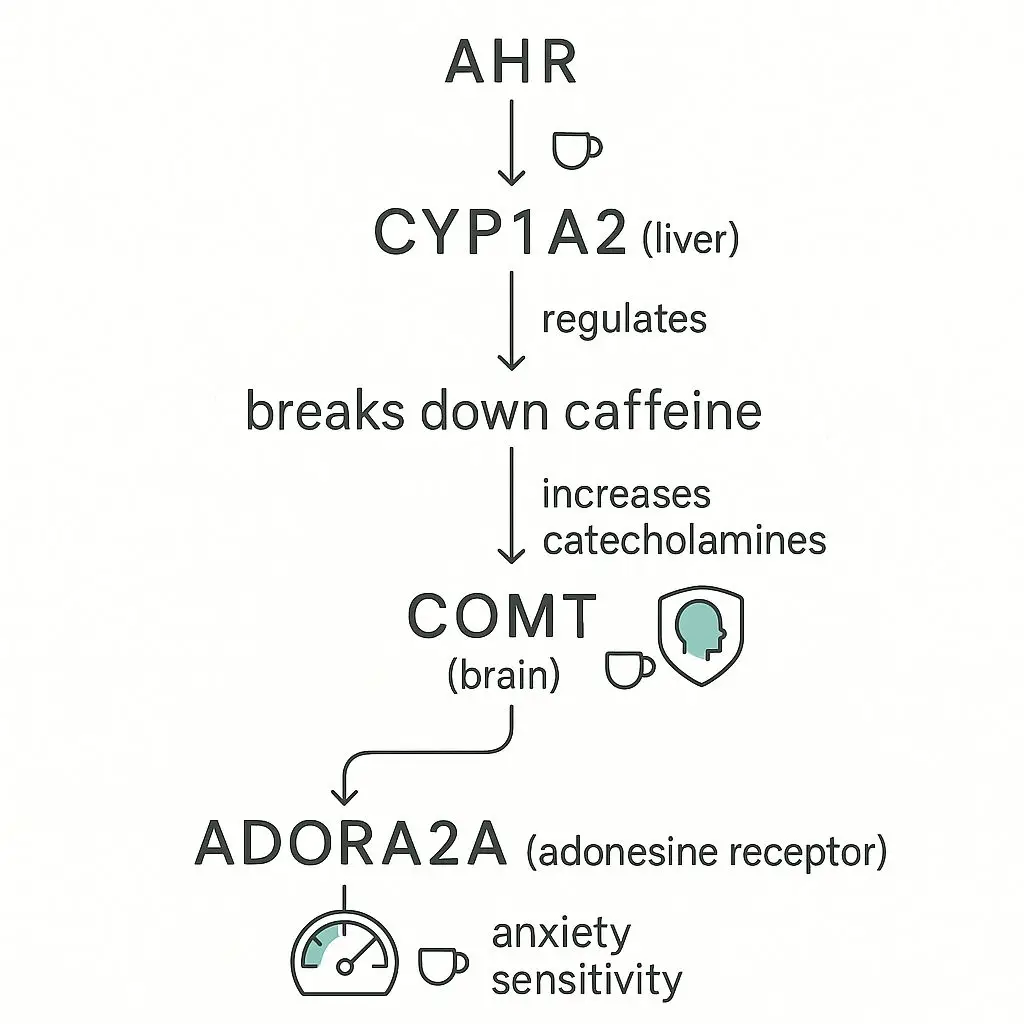
The CYP1A2 gene determines how quickly your liver metabolizes caffeine itself, breaking it down into other compounds. Approximately 50% of people have a variation that processes caffeine slowly, while others carry a fast-metabolizing variant. This gene works upstream of COMT—first, CYP1A2 determines how quickly caffeine gets broken down in your liver, and then COMT influences how your body handles the resulting neurotransmitter cascade.
The combined effect of your CYP1A2 and COMT variants creates your unique caffeine response profile. For example, someone with slow CYP1A2 metabolism and slow COMT metabolism would experience extended caffeine effects and prolonged elevation of stress hormones—a double whammy for sensitivity. Conversely, fast variants of both genes create the classic “caffeine doesn’t affect me” profile.
ADORA2A: The Anxiety Connection
The ADORA2A gene codes for adenosine receptors—the very receptors that caffeine blocks to create its stimulating effects. Variations in this gene directly impact how sensitive you are to caffeine-induced anxiety. Research has shown that people with certain ADORA2A variants experience significantly more anxiety after caffeine consumption regardless of their COMT status.
When combined with slow COMT metabolism, certain ADORA2A variants can create extreme caffeine sensitivity where even small amounts trigger pronounced anxiety responses. Understanding both genes provides a more complete picture of why some people experience primarily physical jitters while others feel more psychological anxiety after caffeine consumption.
AHR: The Gene That Controls CYP1A2
The Aryl Hydrocarbon Receptor (AHR) gene acts as a master regulator that turns the CYP1A2 gene on and off. Variations in AHR directly impact how much CYP1A2 enzyme your body produces, thereby influencing your caffeine metabolism rate. Research indicates that certain AHR variants correlate with higher coffee consumption, possibly because they lead to faster caffeine clearance, reducing negative side effects. For more insights on this, read about how genes affect coffee consumption.
This genetic interaction creates an interesting chain reaction: your AHR gene influences your CYP1A2 activity, which affects how quickly caffeine is metabolized, which then impacts how much catecholamine increase you experience, which is finally processed according to your COMT variant. This complex cascade explains the wide spectrum of individual responses to identical amounts of caffeine.
Customize Your Coffee Habits Based on Your Genetic Profile
Armed with knowledge about your likely genetic profile, you can optimize your caffeine consumption for maximum benefit with minimum side effects. While genetic testing provides the most accurate information, observation of your personal response patterns can help you make educated guesses about your likely COMT status.
Timing Recommendations for Different COMT Types
For slow metabolizers (likely Met/Met carriers), limiting caffeine to early morning consumption—ideally before 10 AM—allows maximum clearance time before sleep. Consider implementing a “caffeine curfew” of at least 12 hours before bedtime to minimize sleep disruption. Medium metabolizers (Val/Met) typically do well with a cutoff time of around 2 PM, while fast metabolizers (Val/Val) may tolerate afternoon coffee with minimal sleep impact, though limiting consumption after 4 PM is still prudent for optimal sleep hygiene. For more insights on how genes affect caffeine metabolism, explore related studies.
Dosage Guidelines Based on Your Likely Genotype
Slow metabolizers generally benefit from limiting consumption to 100-200mg of caffeine daily (roughly 1-2 standard cups of coffee), preferably split into smaller doses rather than consumed all at once. Medium metabolizers typically tolerate 200-300mg daily without significant side effects, while fast metabolizers may comfortably consume 300-400mg spread throughout the day. Remember that these are general guidelines—your individual response may vary based on other genetic and environmental factors. For more insights, check out how genes influence caffeine consumption.
Alternative Caffeinated Drinks for Sensitive Types
If you’re a slow metabolizer but still crave the ritual and taste of coffee, consider alternatives that provide a gentler experience. Green tea offers a balanced option with lower caffeine content (25-45mg per cup) plus L-theanine, which moderates caffeine’s effects by promoting alpha brain waves associated with calm alertness. White tea provides even less caffeine (15-30mg per cup) while still offering a pleasant ritual. For those who enjoy coffee’s flavor, high-quality decaf processed using the Swiss Water method retains taste while removing 99.9% of caffeine.
Find Out Your COMT Status: Testing Options
While observing your response to caffeine provides clues about your likely COMT status, genetic testing offers definitive answers. Several options exist for determining your COMT genotype, ranging from comprehensive health panels to specific SNP testing. The specific marker you’re looking for is rs4680, which identifies whether you carry the Val or Met variants.
Direct-to-Consumer Genetic Testing
Companies like 23andMe, AncestryDNA, and others include the COMT rs4680 marker in their standard testing panels. After testing, you can download your raw genetic data and search for rs4680 to determine your status. In your results, the A allele corresponds to the Met variant (slower metabolism), while the G allele represents the Val variant (faster metabolism).
More specialized testing services like Genomelink, Genetic Genie, or Promethease can analyze your raw data from other services to provide more detailed information about your COMT status and what it means for various aspects of health and wellness, including caffeine metabolism. Some dedicated health-focused genetic tests from companies like Pathway Genomics or Nutrigenomix specifically include caffeine metabolism markers in their panels with detailed interpretation. For those interested in understanding the broader implications of their genetic results, exploring the difference between ancestry and health DNA testing can be enlightening.
How to Interpret Your Raw Genetic Data
When examining your genetic results for rs4680, you’ll see two letters representing the alleles you inherited from each parent. If you see G/G, you have the Val/Val variant (fast metabolism); if you see A/A, you have the Met/Met variant (slow metabolism); and if you see A/G, you have the Val/Met variant (intermediate metabolism). Remember that your COMT status is just one factor influencing caffeine response, so consider testing for CYP1A2 (rs762551) and ADORA2A (rs5751876) for a more complete picture.
Signs That Suggest Your COMT Type Without Testing
Even without genetic testing, certain patterns can hint at your likely COMT status. If you experience anxiety, jitters, or insomnia after small amounts of caffeine that last for hours, you may be a slow metabolizer (Met/Met). If you can drink multiple cups throughout the day with minimal side effects or need coffee to feel normal, you likely have the fast metabolism variant (Val/Val). People who notice moderate, predictable effects from caffeine that don’t last excessively long typically have the intermediate variant (Val/Met).
Your Personalized Coffee Strategy Starts With Understanding Your Genes
The science of caffeine metabolism illuminates why blanket recommendations about coffee consumption often fall short. Your unique genetic profile, particularly your COMT status, creates a personal caffeine response pattern that differs fundamentally from others. By understanding these differences, you can stop blaming willpower or sensitivity and start making informed choices aligned with your biology.
Consider tracking your caffeine consumption and response patterns for several weeks, noting timing, amount, and effects on mood, energy, and sleep. This personal data, combined with knowledge of your likely genetic profile, allows you to develop truly personalized guidelines. Remember that other factors—including stress levels, hormonal fluctuations, medication use, and overall health—interact with your genetic predispositions to influence your day-to-day caffeine response.
By honoring your unique genetic makeup instead of fighting against it, you can transform your relationship with caffeine from a source of frustration to a tool for optimized well-being. Whether you’re a Warrior who thrives on regular coffee breaks or a Worrier who benefits from minimal, strategic caffeine use, understanding the COMT connection empowers you to make choices aligned with your biology rather than arbitrary cultural norms about coffee consumption.
Frequently Asked Questions
The intersection of genetics and caffeine metabolism generates many questions as people discover their unique response patterns. Here are answers to some of the most common questions about COMT variants and caffeine sensitivity.
Understanding these nuances helps demystify why caffeine affects different people in such dramatically different ways and provides practical guidance for optimizing your personal caffeine strategy.
Can my COMT gene status change over time?
Your COMT gene variant is fixed from birth and does not change throughout your lifetime. You inherit one copy from each parent, determining whether you’re a Val/Val, Val/Met, or Met/Met carrier. However, the expression and activity of the COMT enzyme can fluctuate based on various factors including hormonal status, stress levels, medication use, and overall health.
What may change over time is how caffeine affects you as other physiological systems evolve. For example, many people notice increased caffeine sensitivity with age, likely due to changes in overall metabolism, liver function, and hormone levels rather than changes in the COMT gene itself.
How does the COMT gene affect other stimulants besides caffeine?
The COMT enzyme processes catecholamines regardless of their source, so its activity influences your response to all substances and experiences that increase these neurotransmitters. This includes other dietary stimulants like theobromine (found in chocolate), medications such as ADHD stimulants (methylphenidate, amphetamine derivatives), and even your response to exercise, stress, and excitement. Slow COMT metabolizers often report heightened sensitivity across multiple stimulant categories, not just caffeine.
Is there a way to “hack” my COMT gene to enjoy coffee without side effects?
While you can’t change your genetics, you can strategically work with your biology to modify how caffeine affects you. For slow metabolizers, adding L-theanine (found naturally in green tea or available as a supplement) helps moderate caffeine’s effects by promoting alpha brain waves associated with calm alertness. The typical effective ratio is 2:1 (L-theanine:caffeine), so 200mg L-theanine with 100mg caffeine. To understand more about how your genes influence your health, you can explore the science explained here.
Other approaches include consuming caffeine with food to slow absorption, choosing darker roasts (which typically contain slightly less caffeine), and ensuring adequate magnesium intake, as this mineral helps regulate the stress response system. Some slow metabolizers also report benefits from supporting overall detoxification pathways through cruciferous vegetables, which may indirectly support catecholamine processing.
COMT-Friendly Coffee Alternatives
For those with slow COMT metabolism seeking alternatives to regular coffee:
- Adaptogen Coffee: Blends with mushrooms like Lion’s Mane or herbs that support stress resilience
- Chicory Root Coffee: Caffeine-free alternative with a similar rich flavor profile
- Teeccino: Herbal coffee alternative made from carob, chicory, and herbs
- Dandelion Root Tea: Offers liver support with a roasted, coffee-like flavor
- Rooibos Lattes: Caffeine-free red tea that pairs well with milk and spices
These alternatives provide the ritual and comfort of coffee without the catecholamine surge that can overwhelm slow metabolizers. Many can be prepared in similar ways to coffee, including in espresso makers or French presses, maintaining the sensory experience while eliminating unwanted side effects.
How do hormones interact with COMT function and caffeine metabolism?
Hormones significantly influence COMT enzyme activity, creating fluctuating caffeine sensitivity throughout the month for many women. Estrogen inhibits COMT enzyme activity, effectively making someone temporarily more like a slow metabolizer regardless of their genetic status. This explains why many women notice increased caffeine sensitivity during high-estrogen phases of their cycle (typically the follicular phase and ovulation) and reduced sensitivity during the low-estrogen luteal phase.
For women taking hormonal contraceptives or hormone replacement therapy, this effect may be more consistent, potentially creating ongoing increased caffeine sensitivity. Pregnancy dramatically amplifies this effect, with the half-life of caffeine increasing from 3-5 hours to 9-11 hours by the third trimester due to both hormonal influences on COMT and decreased CYP1A2 activity. This biological reality makes personalized caffeine strategies particularly important for women.
Can medications affect how my COMT gene processes caffeine?
Several medications directly or indirectly influence catecholamine metabolism and can interact with your genetic COMT status to alter caffeine response. COMT inhibitors, used in treating conditions like Parkinson’s disease, directly block the enzyme’s activity, potentially making everyone respond more like slow metabolizers. Certain antidepressants, particularly MAOIs and some SSRIs, can increase catecholamine levels, potentially amplifying caffeine’s effects. To understand more about how genes impact your wellness journey, consider exploring additional resources.
Additionally, some medications compete with caffeine for the same metabolic pathways, indirectly slowing its clearance. Common examples include certain antibiotics (fluoroquinolones like Cipro), antiarrhythmics (Mexiletine), and bronchodilators (Theophylline). If you’re taking medications and notice changes in caffeine sensitivity, consult your healthcare provider about potential interactions with your COMT function and overall caffeine metabolism.
Understanding your genetic caffeine response isn’t just about satisfying curiosity—it’s about optimizing your daily habits for better health, productivity, and comfort. Whether you’re a slow, intermediate, or fast COMT metabolizer, this knowledge empowers you to make informed choices about when, how much, and what type of caffeine serves you best.
The next time you observe dramatically different responses to the same cup of coffee among friends or family members, you’ll recognize the fascinating genetic underpinnings that make each person’s experience unique. This appreciation for biochemical individuality extends far beyond caffeine, reminding us that personalized approaches to nutrition and lifestyle generally yield better results than one-size-fits-all recommendations.
Find your calm, keep your caffeine
Coffee doesn’t have to be a gamble. Get clarity on your COMT, CYP1A2, and more—and turn your caffeine into a personalized performance tool. Start with a simple genetics-informed wellness consult at Zenith Vital Wellness.