 1.855.305.2430

How Genetic Testing Can Reveal Food Intolerances Leave a comment
Key Takeaways
- Genetic testing can identify specific gene variants linked to common food intolerances like lactose, gluten, and histamine sensitivities, providing personalized insights beyond traditional diagnostic methods.
- Unlike food allergies which trigger immune responses, food intolerances are digestive difficulties often caused by enzyme deficiencies that can be traced to specific genetic variations.
- Your DNA influences how you process different food compounds, with up to 70% of the world’s population carrying genetic markers for lactose intolerance.
- Traditional food intolerance testing methods like elimination diets and breath tests can be time-consuming and inconclusive, while genetic testing offers more definitive results in a single analysis.
- GenoPalate’s specialized testing services help identify your unique genetic predispositions to food intolerances, enabling you to make more informed dietary choices for improved digestive health.
Ever wondered why certain foods leave you feeling bloated, uncomfortable, or running to the bathroom while your friends digest them with ease? The answer might be hiding in your DNA. Food intolerances affect millions of people worldwide, yet many suffer for years without proper diagnosis or understanding of their condition.
Genetic testing is revolutionizing how we approach food sensitivities by uncovering the biological basis for these reactions. Rather than endless elimination diets or inconclusive medical tests, your genes can provide clear insights into why your body struggles with specific foods. GenoPalate’s specialized testing services can help identify your unique genetic predispositions, enabling you to make more informed dietary choices for improved digestive health.
Food Intolerance Mysteries Solved Through Your DNA
The digestive discomfort you experience after eating certain foods isn’t random—it’s your body responding to specific nutritional compounds in predictable ways based on your genetic makeup. Genetic testing examines variations in your DNA that affect how you process everything from dairy to gluten to caffeine, offering explanations for symptoms that may have puzzled you for years.
While traditional approaches to identifying food intolerances involve elimination diets and symptom tracking, genetic testing provides a more direct route to understanding your body’s unique digestive capabilities. By analyzing specific gene variants associated with enzyme production and nutrient metabolism, these tests can reveal inherent food sensitivities you may not have even connected to your symptoms yet.
What Makes Food Intolerances Different from Allergies
- Food allergies trigger immune system responses that can be life-threatening
- Food intolerances cause digestive discomfort but aren’t typically dangerous
- Allergies typically produce immediate reactions while intolerances may take hours or days to manifest
- Intolerances often allow for small amounts of trigger foods without symptoms
- Genetic factors play a stronger role in intolerances than in many allergies
Understanding the fundamental difference between food allergies and intolerances is crucial for proper diagnosis and management. While allergies involve your immune system mistakenly identifying food proteins as threats and launching defensive attacks, intolerances represent your body’s inability to properly digest or metabolize certain food compounds—often due to genetic variations affecting enzyme production.
This distinction explains why allergic reactions typically occur quickly and can affect multiple body systems, while intolerance symptoms are primarily digestive and may take hours to develop. It also clarifies why someone with lactose intolerance might tolerate small amounts of dairy while someone with a milk allergy must avoid all traces of milk proteins.

Immune Response vs. Digestive Difficulty
The biological mechanisms behind allergies and intolerances couldn’t be more different. Food allergies trigger immunoglobulin E (IgE) antibodies, releasing histamine and other chemicals that cause inflammation throughout the body. This reaction can affect your skin, respiratory system, cardiovascular system, and digestive tract simultaneously. In contrast, food intolerances occur when your digestive system lacks specific enzymes needed to break down certain food components, resulting in localized digestive distress as these compounds ferment or irritate your digestive tract.
Common Symptoms That Signal Intolerance
Food intolerance symptoms primarily affect your digestive system but can manifest in surprising ways throughout your body. The most common indicators include bloating, gas, stomach pain, diarrhea, and constipation that occur predictably after consuming trigger foods. However, many people don’t realize that fatigue, brain fog, headaches, and even skin issues can also stem from food intolerances, making them difficult to self-diagnose without proper testing.
The delayed onset of these symptoms—sometimes occurring hours or even days after consumption—further complicates self-diagnosis. This timing disconnect often leads people to overlook the true culprits behind their discomfort, allowing the cycle of consumption and reaction to continue indefinitely.
Symptom severity typically correlates with the amount consumed and your specific genetic profile. Someone with a mild lactase deficiency might only experience symptoms after consuming large amounts of dairy, while someone with multiple genetic variants affecting lactase production may react to even trace amounts in processed foods.
- Digestive symptoms: bloating, gas, abdominal pain, diarrhea, constipation
- Systemic symptoms: fatigue, headaches, brain fog, joint pain
- Skin manifestations: rashes, eczema flares, unexplained itching
- Neurological effects: migraines, mood changes, difficulty concentrating
- Respiratory symptoms: chronic congestion or excess mucus production
Why Traditional Testing Often Falls Short
Conventional methods for diagnosing food intolerances have significant limitations that leave many sufferers without clear answers. Elimination diets—the gold standard for many practitioners—require weeks or months of strict dietary restriction followed by careful reintroduction of suspect foods. This process is time-consuming, requires meticulous record-keeping, and often yields ambiguous results when multiple foods are reintroduced simultaneously or symptoms have multiple triggers.
Hydrogen breath tests for lactose or fructose intolerance provide more objective data but only test for specific digestive capabilities in isolation. These tests also require fasting, can produce false negatives or positives, and don’t account for the genetic variations that might make someone more sensitive to lower levels of these compounds than the test can detect.
Blood tests for food sensitivities remain controversial among medical professionals, with many questioning their scientific validity and reproducibility. Unlike genetic testing which examines fundamental biological capabilities determined by your DNA, these tests capture a momentary snapshot of immune markers that may fluctuate based on recent exposure, stress levels, and other variables.
The Genetic Connection to Food Reactions
Your DNA contains the blueprint for every enzyme and transport protein involved in digesting and metabolizing the foods you eat. Variations in these genetic instructions—often called single nucleotide polymorphisms (SNPs)—can dramatically affect how efficiently your body processes specific food components, from lactose in dairy to gluten in wheat to caffeine in coffee.
These genetic variations explain why food intolerances often run in families and appear more frequently in certain ethnic populations. For example, lactose intolerance affects approximately 5-15% of people of Northern European descent but up to 90% of East Asian populations—a distribution that perfectly mirrors the genetic variations in the MCM6 gene that regulates lactase production.
How Your Genes Influence Food Processing
Every step in the digestion and metabolism of food compounds relies on specific enzymes and transport proteins coded by your genes. When you inherit variants that reduce the production or efficiency of these proteins, your body’s ability to process certain foods becomes compromised. For instance, lactose intolerance results from variations in the MCM6 gene that regulate the production of lactase—the enzyme that breaks down milk sugar.
Similarly, gluten sensitivity may be influenced by HLA-DQ genes that affect how your immune system responds to gluten proteins, while fructose malabsorption connects to variations in the GLUT5 gene that encodes the intestinal transporter for this fruit sugar. The beautiful complexity of this system explains why your digestive capabilities are as unique as your fingerprint.
Key Genes Associated with Common Intolerances
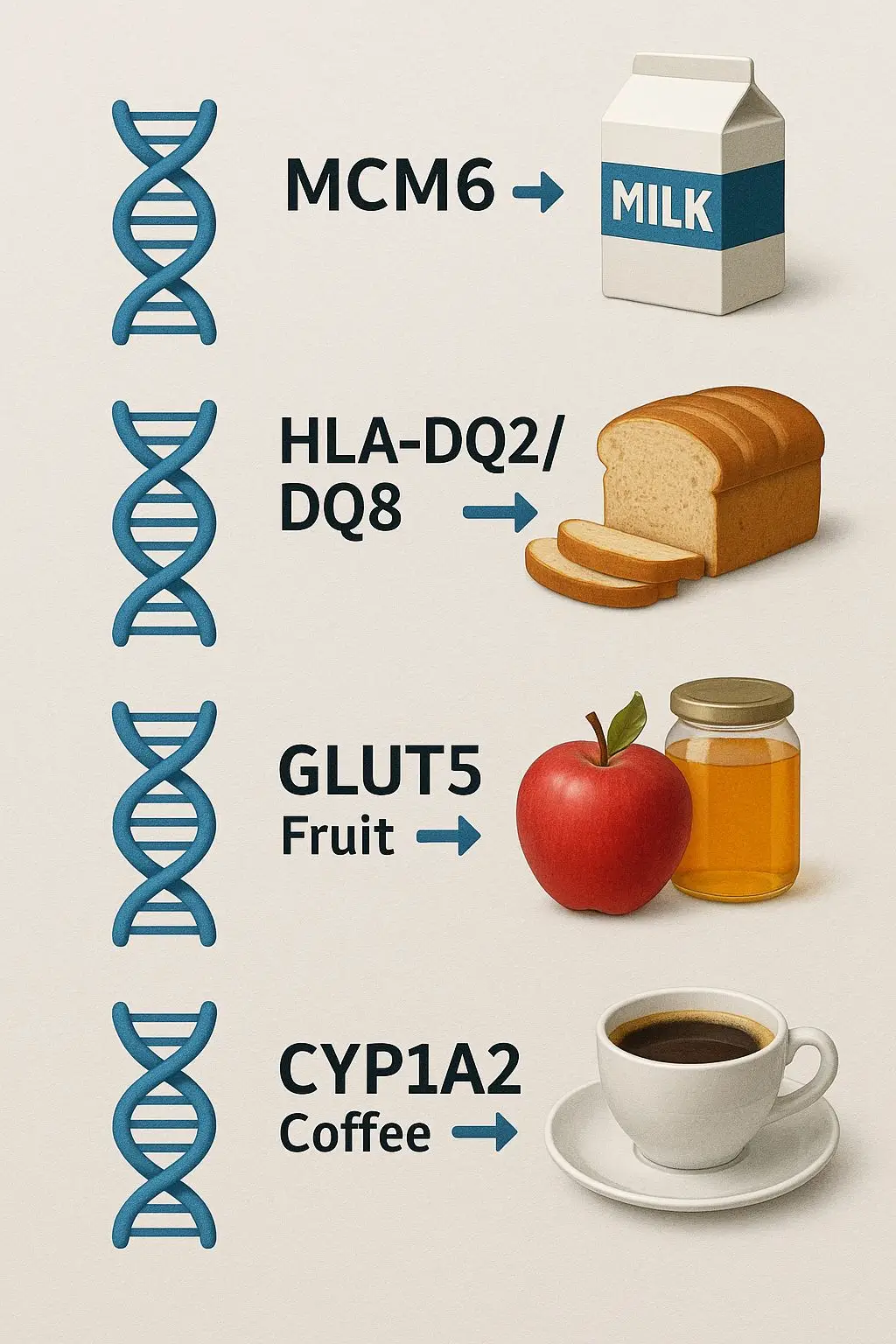
Scientific research has identified several crucial genes that play starring roles in the most common food intolerances. The MCM6 gene contains regulatory elements that control the expression of the LCT gene, which produces lactase—the enzyme that breaks down lactose in dairy products. Specific variations in MCM6 determine whether your lactase production continues into adulthood or diminishes after weaning, as is natural in most mammals.
For gluten sensitivity (distinct from celiac disease), variations in HLA-DQ2 and HLA-DQ8 genes may influence your immune system’s reactivity to gluten proteins, while polymorphisms in non-HLA genes like MAGI2, PARD3, and REL may affect intestinal barrier function. Fructose processing relies heavily on the GLUT5 and KHK genes, which encode the intestinal transporter and the primary metabolic enzyme for this fruit sugar, respectively. To understand more about how your genes influence your health, you can explore the science explained here.
Caffeine sensitivity connects to variations in the CYP1A2 gene, which produces the liver enzyme responsible for approximately 95% of caffeine metabolism. Individuals with the AA genotype are typically “fast metabolizers” who process caffeine efficiently, while those with the AC or CC genotypes clear caffeine more slowly, potentially experiencing prolonged stimulation and stronger side effects.
The Role of Epigenetics in Developing Sensitivities
While your genetic code provides the foundation for how your body processes different foods, epigenetic factors—changes in gene expression that don’t alter the underlying DNA sequence—help explain why sensitivities sometimes develop later in life or vary in severity over time. Environmental factors like stress, infections, antibiotic use, and even aging can trigger epigenetic changes that alter how your existing genes function, potentially reducing enzyme production or changing gut barrier properties.
Types of Intolerances Detectable Through Genetic Testing
Genetic testing can reveal predispositions to a wide range of food intolerances, providing valuable insights before symptoms even develop. Understanding your genetic risk factors allows for proactive dietary adjustments rather than reactive responses to uncomfortable symptoms. Most commercially available tests focus on the most common food intolerances with well-established genetic connections.
1. Lactose Intolerance Genes
Lactose intolerance—the most common food intolerance worldwide—has the strongest and best-understood genetic connection. The condition stems from insufficient production of lactase, the enzyme that breaks down milk sugar. About 70% of the world’s population carries genetic variants in the MCM6 gene that cause lactase levels to decline after childhood, making dairy products increasingly difficult to digest with age.
Specific variants like C/T-13910 and G/A-22018 in the MCM6 gene strongly predict lactase persistence—the continued production of lactase into adulthood that allows for comfortable dairy consumption. People with two copies of the ancestral versions of these variants (C/C-13910 and G/G-22018) typically develop lactose intolerance, while those with at least one copy of the newer variants usually retain the ability to digest dairy throughout life.
Interestingly, genetic lactase persistence evolved independently in different populations around the world, with different genetic variations accomplishing the same outcome. This represents one of the clearest examples of recent human evolution in response to dietary changes that accompanied the domestication of dairy animals roughly 10,000 years ago.
2. Gluten Sensitivity Markers
While celiac disease has well-established genetic links to HLA-DQ2 and HLA-DQ8 genes, non-celiac gluten sensitivity involves a more complex genetic picture. Research suggests that variations in genes controlling intestinal barrier function and innate immunity may contribute to gluten sensitivity even in the absence of celiac disease. Genes like MAGI2, PARD3, and REL appear to influence how the intestinal lining responds to gluten exposure in sensitive individuals.
Genetic testing can identify if you carry the high-risk HLA variants associated with celiac disease, which affect approximately 30-40% of the population. Though not everyone with these variants develops celiac disease, their presence indicates increased vigilance may be warranted, especially if digestive symptoms occur. For non-celiac gluten sensitivity, emerging genetic panels examine a broader range of genes involved in intestinal barrier function and inflammatory response. To understand more about these genetic variants, you can explore what your DNA really tells you.
Recent research suggests that other components in wheat beyond gluten, such as amylase-trypsin inhibitors and fermentable carbohydrates (FODMAPs), may trigger symptoms in some individuals. This complexity explains why genetic testing for gluten sensitivity continues to evolve as scientists identify additional genetic factors influencing reactions to wheat and related grains.
3. Fructose Malabsorption Indicators
Fructose malabsorption occurs when your intestines can’t efficiently transport this fruit sugar from your digestive tract into your bloodstream, leading to fermentation by gut bacteria and resulting discomfort. Genetic variations in the GLUT5 gene, which encodes the primary fructose transporter in your intestine, can significantly reduce your capacity to absorb this common sugar found in fruits, honey, and high-fructose corn syrup.
Additional genes like KHK (ketohexokinase) influence how efficiently your body metabolizes fructose after absorption, potentially contributing to fructose sensitivity even when intestinal transport functions normally. Genetic testing can identify variations in these genes that may predispose you to fructose-related digestive distress, helping explain why some people can enjoy fruit freely while others experience significant symptoms after even small amounts.
Success Stories: When Genetic Testing Changes Lives
Sarah had struggled with unexplained digestive issues for over a decade, visiting countless specialists and trying numerous elimination diets without finding clear answers. After undergoing genetic testing, she discovered she carried multiple variants affecting histamine processing, explaining why seemingly unrelated foods triggered similar symptoms. This knowledge allowed her to implement a low-histamine diet and supplement with DAO enzyme support, reducing her symptoms by over 80% within just two months.
Michael, a competitive cyclist, couldn’t understand why his performance and recovery suffered despite following nutrition plans that worked for his teammates. Genetic testing revealed he was a slow caffeine metabolizer with variants affecting his body’s processing of saturated fats. By adjusting his pre-race caffeine timing and modifying his fat intake, he improved his race times and reduced post-training fatigue dramatically. His experience highlights how genetic insights can be particularly valuable for athletes whose bodies are pushed to performance limits.
The Future of Personalized Nutrition Through Genetics
We stand at the threshold of a nutrition revolution where generic dietary guidelines will give way to personalized recommendations based on individual genetic profiles. As research advances and testing becomes more affordable, we’re moving toward a future where your grocery list and restaurant choices could be guided by your genetic predispositions rather than generalized nutrition advice. This shift promises to prevent food-related discomfort before symptoms develop and optimize wellness through truly personalized nutrition strategies.
Emerging Research and Technologies
The next generation of food intolerance genetic testing will integrate artificial intelligence to analyze complex patterns across thousands of genetic markers simultaneously. Current research is exploring how machine learning algorithms can identify subtle relationships between multiple gene variants that collectively influence food processing capabilities. These advancements will move beyond single-gene analysis to understand how your entire genome contributes to your nutritional needs and sensitivities, providing increasingly accurate and nuanced dietary guidance.
Beyond Single Gene Analysis
Future testing will likely incorporate microbiome analysis alongside genetic testing, recognizing that your gut bacteria play a crucial role in how you process different foods. This combined approach acknowledges that food intolerances result from complex interactions between your genetic predispositions and your microbiome composition. Scientists are also investigating how gene expression changes in response to dietary patterns, suggesting that epigenetic testing may eventually complement genetic analysis to provide a more complete picture of food sensitivities.
Research on gene-diet interactions continues to uncover surprising connections, such as how specific genetic variants might influence your response to different dietary fats or your body’s ability to extract nutrients from plant versus animal sources. These discoveries point toward increasingly sophisticated dietary recommendations that consider not just what foods might cause discomfort, but which foods optimize your health based on your unique genetic profile.
Your Path Forward: Should You Get Tested?
If you’ve experienced persistent digestive symptoms, unexplained fatigue, or food-related discomfort that hasn’t been resolved through conventional approaches, genetic testing for food intolerances could provide valuable insights. The testing process is simple—typically involving a saliva sample or cheek swab—and can be done from home with results available within a few weeks. The most beneficial approach is to work with healthcare providers who can help interpret your genetic results alongside your symptoms and medical history, creating a comprehensive picture of your nutritional needs and sensitivities.
Frequently Asked Questions (FAQ)
Food intolerance genetic testing represents a relatively new approach to understanding digestive health, and naturally raises questions about accuracy, process, and practical application. The answers below address the most common concerns people have when considering genetic testing for food sensitivities, helping you make an informed decision about whether this approach might be right for your situation.
Remember that genetic testing provides information about predispositions, not definitive diagnoses, and works best as part of a comprehensive approach to digestive health that may include traditional testing methods, elimination diets, and professional guidance.
How accurate are genetic tests for food intolerances?
Genetic tests for lactose intolerance show the highest accuracy, with studies demonstrating 97-100% correlation between specific MCM6 gene variants and clinical lactose intolerance. For other intolerances, accuracy varies based on the complexity of genetic factors involved. Gluten sensitivity testing, for instance, can reliably identify whether you carry high-risk HLA variants, but cannot definitively predict if you’ll develop symptoms. The science continues to evolve, with new genetic markers being validated through ongoing research that improves testing accuracy for complex intolerances like fructose and histamine sensitivity.
What’s the price range for food intolerance genetic testing?
Costs typically range from $99 for basic single-intolerance tests to $300-500 for comprehensive panels that analyze multiple potential sensitivities. Many specialized nutrition-focused genetic tests fall in the $150-250 range, often including detailed reports and dietary recommendations based on your results. Some health insurance plans may cover testing if ordered by a healthcare provider for specific medical reasons, though most direct-to-consumer tests are not currently covered by insurance.
Can children undergo genetic testing for food sensitivities?
Yes, genetic testing is safe for children of all ages, requiring only a simple saliva sample or cheek swab. Testing can be particularly valuable for children with unexplained digestive symptoms, as it can help identify potential dietary triggers without subjecting them to lengthy elimination diets or invasive procedures. Parents should work closely with pediatricians or pediatric gastroenterologists when interpreting results, as children’s nutritional needs differ from adults’, and dietary modifications must ensure proper growth and development. For those interested in understanding more about what genetic testing can reveal, here’s a guide on how to read your DNA test results.
For infants and very young children, testing may provide insights about potential future sensitivities before introducing certain foods, allowing for more strategic dietary introduction. Some parents choose to test children with family histories of specific intolerances, such as celiac disease or lactose intolerance, to guide early nutritional decisions.
Remember that genetic predispositions don’t always manifest as symptoms, particularly in children whose digestive systems are still developing. A positive genetic marker should inform monitoring rather than immediate dietary restriction.
How do environmental factors interact with genetic predispositions?
Your genetic code provides the blueprint, but environmental factors can significantly influence whether and when food intolerances become symptomatic. Gut infections, antibiotic use, chronic stress, and even aging can trigger or worsen food sensitivities by altering gut barrier function, changing your microbiome composition, or influencing enzyme production. This explains why some people develop food intolerances later in life despite having the genetic predisposition from birth, and why sensitivity severity often fluctuates over time rather than remaining constant.
Can genetic testing predict intolerances that haven’t developed yet?
Genetic testing can identify predispositions to certain food intolerances before symptoms appear, particularly for conditions with strong genetic connections like lactose intolerance. However, carrying a genetic variant doesn’t guarantee you’ll develop symptoms, as environmental factors and epigenetic influences also play important roles. The predictive value varies by intolerance type—lactose intolerance predictions show approximately 95% accuracy in predicting future development, while predictions for more complex sensitivities may be less definitive.
For many people, the value lies not in predicting future problems but in understanding their potential risk factors, allowing them to monitor symptoms more attentively when consuming certain foods. This awareness can lead to earlier identification of emerging sensitivities before they cause significant discomfort.
When considering predictive genetic testing, focus on actionable information—knowledge that can guide meaningful lifestyle adjustments rather than create unnecessary dietary restrictions or anxiety about potential future problems.
Ultimately, genetic testing represents just one tool in understanding your body’s relationship with food, most powerful when combined with mindful attention to your body’s signals and professional guidance from nutrition and healthcare experts.
Ready to discover how your genes might be influencing your food sensitivities? GenoPalate’s comprehensive testing can help unlock the mystery of your digestive health, providing personalized insights based on your unique genetic profile.
Your body deserves answers, not guesswork. Discover how your genes shape your nutrition and take the first step toward a healthier, symptom-free life. Start your personalized wellness journey today with Zenith Vital Wellness.